
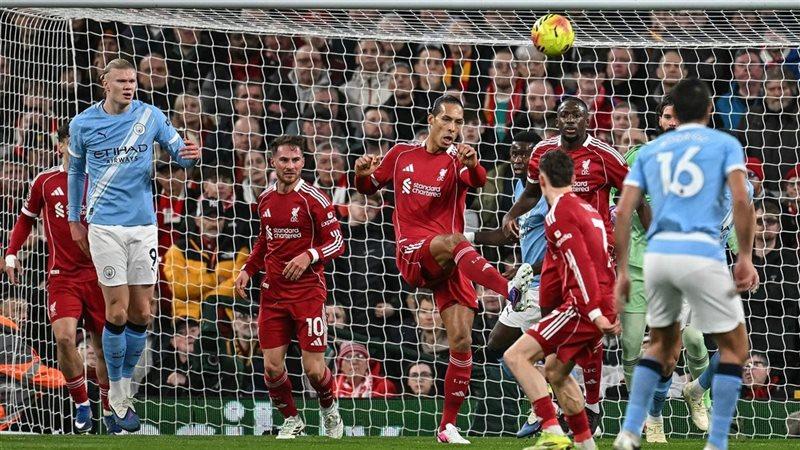
Despite concerns about Liverpool's midfield and defensive capabilities, there is an argument that the team's defensive system could be far more difficult to break down than some critics suggest.
Individual mistakes have contributed to defensive problems, but those cannot always be blamed on the system itself. Players such as Ryan Gravenberch and Dominik Szoboszlai have made costly errors, while even the strongest defensive line will occasionally be exposed.
Liverpool also possesses two major safety nets in Alisson Becker and Virgil van Dijk. Alisson remains one of the game's best shot-stoppers and is particularly strong in one-on-one situations, while Van Dijk's dominance in the air provides another layer of protection.
The potential addition of Ronald Araújo would add another important quality: pace and aggression. The defender is quick, front-footed and comfortable defending aggressively, giving Liverpool another option when opponents attempt to attack space behind the defence.
More importantly, the defensive structure itself should not be underestimated.
A team can defend effectively with two midfielders protecting the defence, two banks of four, a low block, or variations that see one player drop into a back five. These structures can make it extremely difficult for opponents to play through the middle or create clear chances, particularly when Liverpool's pressing is coordinated.
Even weaker Liverpool sides have demonstrated how effective a disciplined defensive structure can be in cup competitions.
Liverpool will undoubtedly need to improve their ability to stop counterattacks, but the idea that the system is inherently "leaky" may be too simplistic. With better organisation, individual errors reduced and the right personnel available, Liverpool's defensive setup could prove much harder to beat than many expect.